
3.2. Heavy-Duty Fleet Characterization#
This section focuses on the EMFAC2025 population trends for diesel and natural gas fueled medium heavy-duty and heavy heavy-duty (MHD and HHD) trucks and buses operating in California. Medium heavy-duty trucks have a gross vehicle weight rating (GVWR) of 14,001 to 33,000 pounds. Heavy heavy-duty trucks have a GVWR greater than 33,000 pounds. Bus fleet types include school buses, transit buses, motor coaches, and other buses. The following sections show comparisons of the population counts, new vehicle sales, and age distributions for EMFAC2025 and EMFAC2021. EMFAC2021 had a base year of 2019 while EMFAC2025 has a base year of 2022. Therefore, staff updated population data for calendar years 2020, 2021, and 2022 in EMFAC2025.
3.2.1. Major Data Sources for Update#
Processed DMV data: As discussed in the light-duty vehicle section, the DMV data for historical years through 2022 was used to provide updated vehicle information for vehicles registered in California. DMV data field values are used to designate utility, public fleet vehicles, tractors, and solid waste collection vehicles. After identifying all other fleet types using all of the various data sources, the remaining trucks are designated as in-state single trucks, and the remaining buses are designated as all other buses.
International Registration Plan (IRP) Data: IRP Clearinghouse data is another primary data source for historical heavy-duty vehicle updates through 2022. Vehicles already registered in California can be identified as interstate trucks (CA IRP fleet) or buses (motor coach fleet). In addition, for out-of-state vehicles in states and provinces that report to the IRP Clearinghouse, updates were made using vehicle characteristics for fleets that travel to California. Out-of-state fleets report into IRP their annual mileage to California at a fleet level, and not per individual vehicle. Since out-of-state fleets may send many or none of their fleet’s individual trucks to travel into California, it is more important to estimate their VMT travel in California than to estimate counts of unique out-of-state vehicles, which cannot be determined accurately. Using International Fuel Tax Agreement (IFTA) mileage data for the years 2018 through 2022, the historical ratio of VMT for out-of-state trucks as compared to VMT by CA IRP trucks was updated to 1.186 for T7 Non-neighboring Out-of-state truck (NNOOS) and to 0.364 for T7 Neighboring Out-of-state truck (NOOS) for EMFAC2025. The NNOOS and NOOS ratios were updated from 1.206 and 0.395 in EMFAC2021, respectively. These updates were made under the assumption that HHDT vehicles represented 95% of all the reported VMT and MHDT vehicles represented 5% (based on past studies). Using these ratios, VMT was calculated for T6 OOS, T7 NNOOS and T7 NOOS categories of EMFAC2021 and their populations were back-calculated with the use of mileage accrual schedules from an Eastern Research Group (ERG) report on Heavy Duty Vehicle Accrual Rates (ERG, 2019).
Automated License Plate Reader (ALPR) data: Age distributions of out-of-state trucks are determined by ALPR data collected along major truck corridors in southern California, including locations in Mountain Pass, Calexico, Blythe, I-710, SR-103, and I-405, during calendar year 2022. Staff obtained fleet model year distributions by matching plate characters and states (e.g., Nevada) collected by ALPR systems to the IRP database. Staff determined age distributions by calculating the difference between calendar year and model year. Figure 3.16 compares calendar year 2022 age distributions of Class 8 Out-of-State Trucks (NOOS and NNOOS) from EMFAC2021 that used previous assumptions of age distributions and EMFAC2025 that uses an age distribution based on ALPR data.
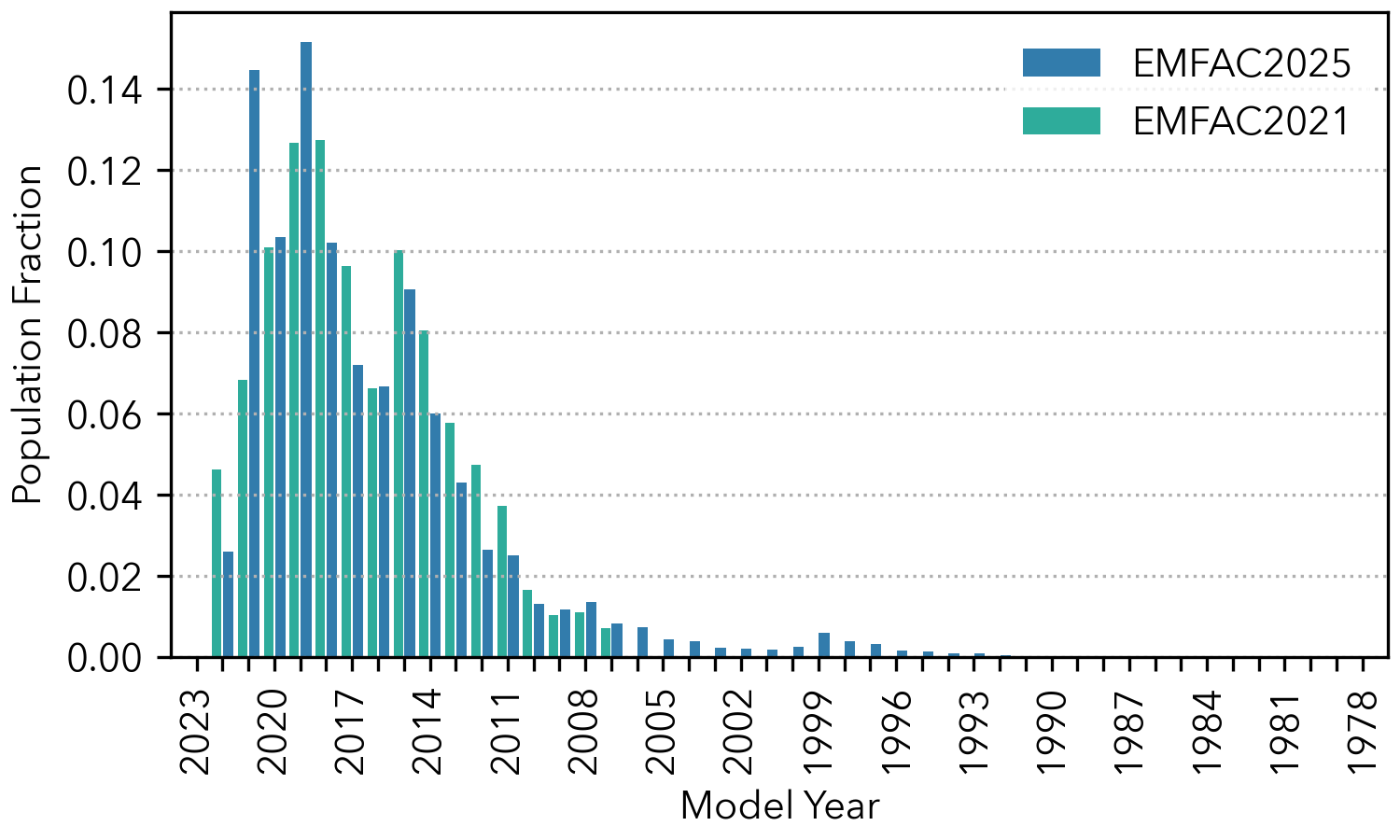
Figure 3.16: Year 2022 Age Distribution for Class 8 Out-of-State Trucks: EMFAC2025 (Actual) vs. EMFAC2021 (Forecasted)#
TRUCRS data for diesel Truck and Bus Rule: Data extracted from the TRUCRS database was used to update the heavy-duty inventory as needed for fleets utilizing flexible compliance options to meet Truck and Bus Rule requirements.
Drayage Trucks Operating at Major Ports: The Port of Los Angeles/Long Beach (POLA) and the Port of Oakland (POAK) provided lists of VINs for vehicles that actually visited the ports to directly flag Class 8 vehicles used as port trucks. POAK provided annual lists with VIN and license plate data, which was used to update the calendar year 2020 to 2022 inventory. POLA provided VIN lists that included details on the monthly trips per VIN and the monthly average number of trucks to use for EMFAC modeling to update. The selected VINs to flag as POLA each year were based on having annual trips to the port above a certain threshold. Thresholds were calculated for each year such that the level of annual trips used to identify which VINs to flag as POLA resulted in achieving the monthly average truck counts provided by POLA. Trucks not displayed as POAK or POLA in EMFAC may be in lower weight classes, have fuel types other than diesel/electric/natural gas, be considered inactive trucks as annual visits are too low, or have out-of-state registration status. These trucks are included in other EMFAC categories for vehicle activity and emissions calculation purposes.
California Highway Patrol (CHP) School Bus Inspections: The CHP provided data on School Buses that receive safety inspections required by law. These datasets contain VINs which are used to determine the final count of School Buses in EMFAC2025, as the CHP lists are considered to be more accurate than school bus records in DMV data.
3.2.2. In-State Population#
Figure 3.17 compares EMFAC2025 and EMFAC2021 vehicle population for heavy-duty instate trucks, showing those that operate within California and use diesel or natural gas fuel. CAIRP trucks were excluded here as instate, since a good portion of their miles are driven outside of California. Please note that estimates from both EMFAC2025 and EMFAC2021 are based on the DMV vehicle registration data. As shown below, EMFAC2025 has a higher actual vehicle population than was forecasted by EMFAC2021 for calendar years 2021 and 2022.
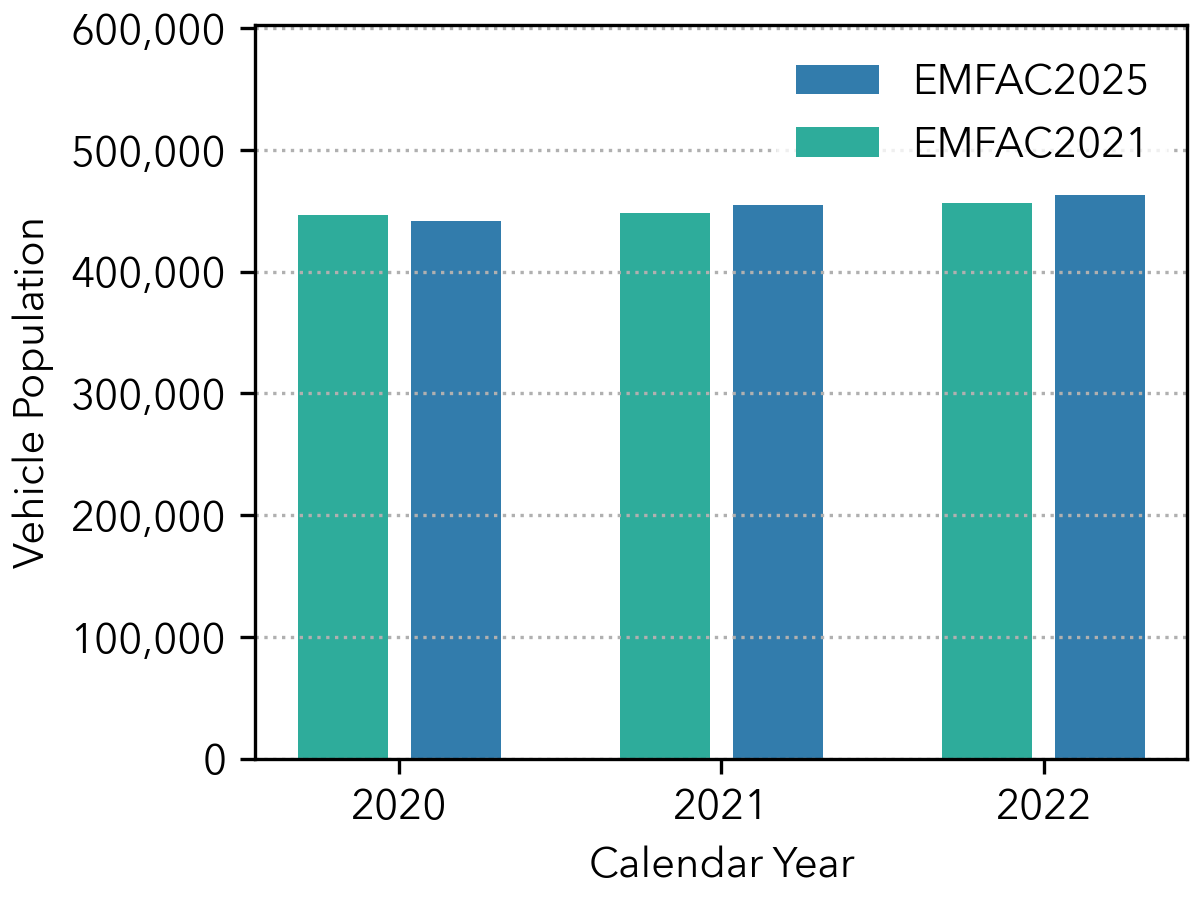
Figure 3.17: Instate Heavy Duty Vehicle Population: EMFAC2025 (Actual) vs. EMFAC2021 (Forecasted)#
Figure 3.18 compares EMFAC2025 and EMFAC2021 new sales of heavy-duty instate trucks. New sales include all vehicles with chassis model years equal to or greater than the calendar year. For calendar years 2020 to 2022, the new vehicles sales exceeded the EMFAC2021 forecasts with an increase of 12% in 2020, 64% in 2021, and 70% in 2022.
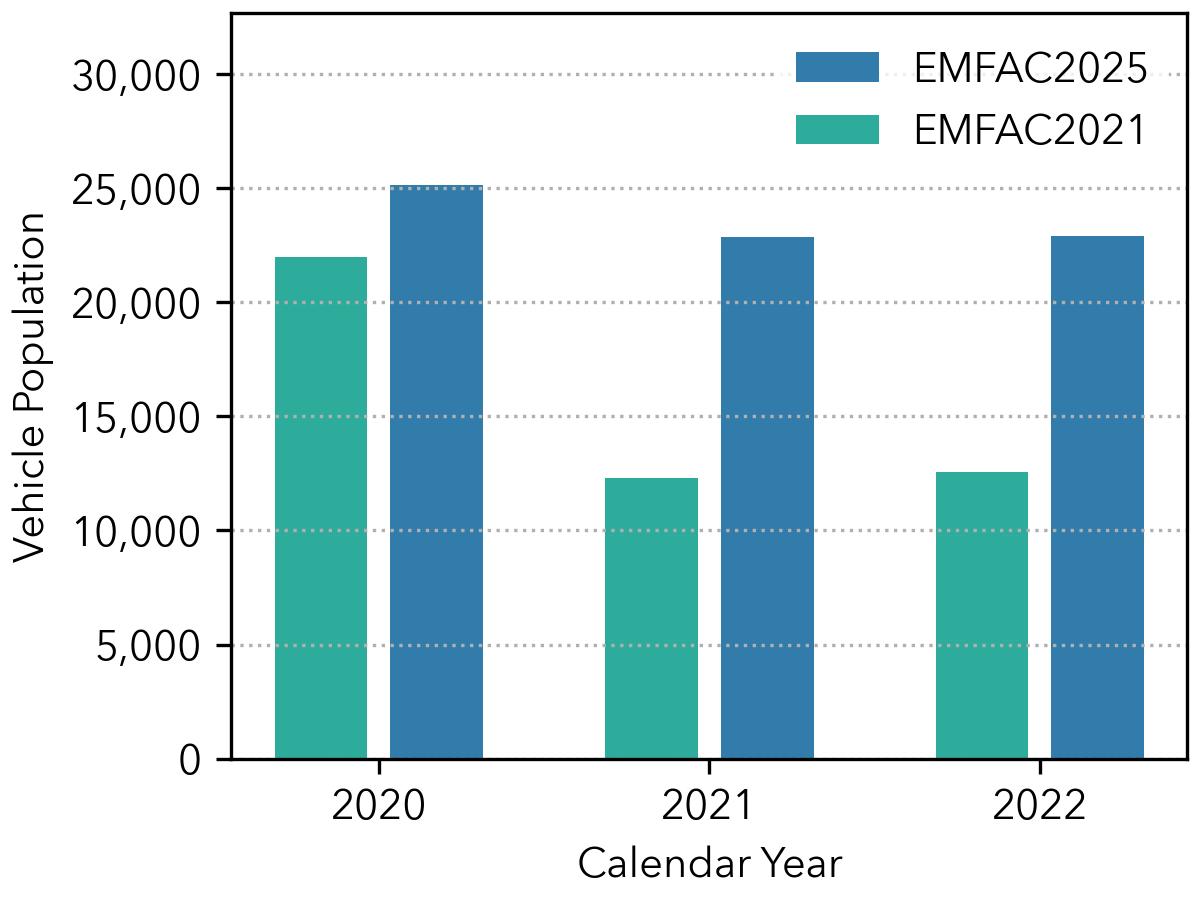
Figure 3.18: Instate Heavy Duty New Vehicle Sales: EMFAC2025 (Actual) vs. EMFAC2021 (Forecasted)#
Figure 3.19 compares EMFAC2025 and EMFAC2021 counts of vehicles with a chassis model year of 2011 and greater, which would be compliant with the Truck and Bus Rule model year 2010 engine standard requirements. For the majority of heavy-duty trucks, there is typically a one-year lag in the chassis model year from the engine model year. These population counts would include both new and used vehicle sales. The EMFAC2021 forecasted population exceeded the updated population for EMFAC2025. EMFAC2021 Truck and Bus Rule assumptions anticipated a higher rate of vehicle sales for model year 2010 engine compliant used vehicles. This is generally due to EMFAC2021 assuming a gradual turnover of the 2010 engine standard leading up to 2023, when phase-in requirements of the Truck and Bus Regulation are fully implemented. However, the EMFAC2025 update suggests that owners were hanging onto their older trucks until the very last year they are required to turn them over to a 2010 engine standard truck. The EMFAC model does assume full compliance with the Truck and Bus Regulation from calendar year 2023 and onward, except for vehicles claiming exemptions.
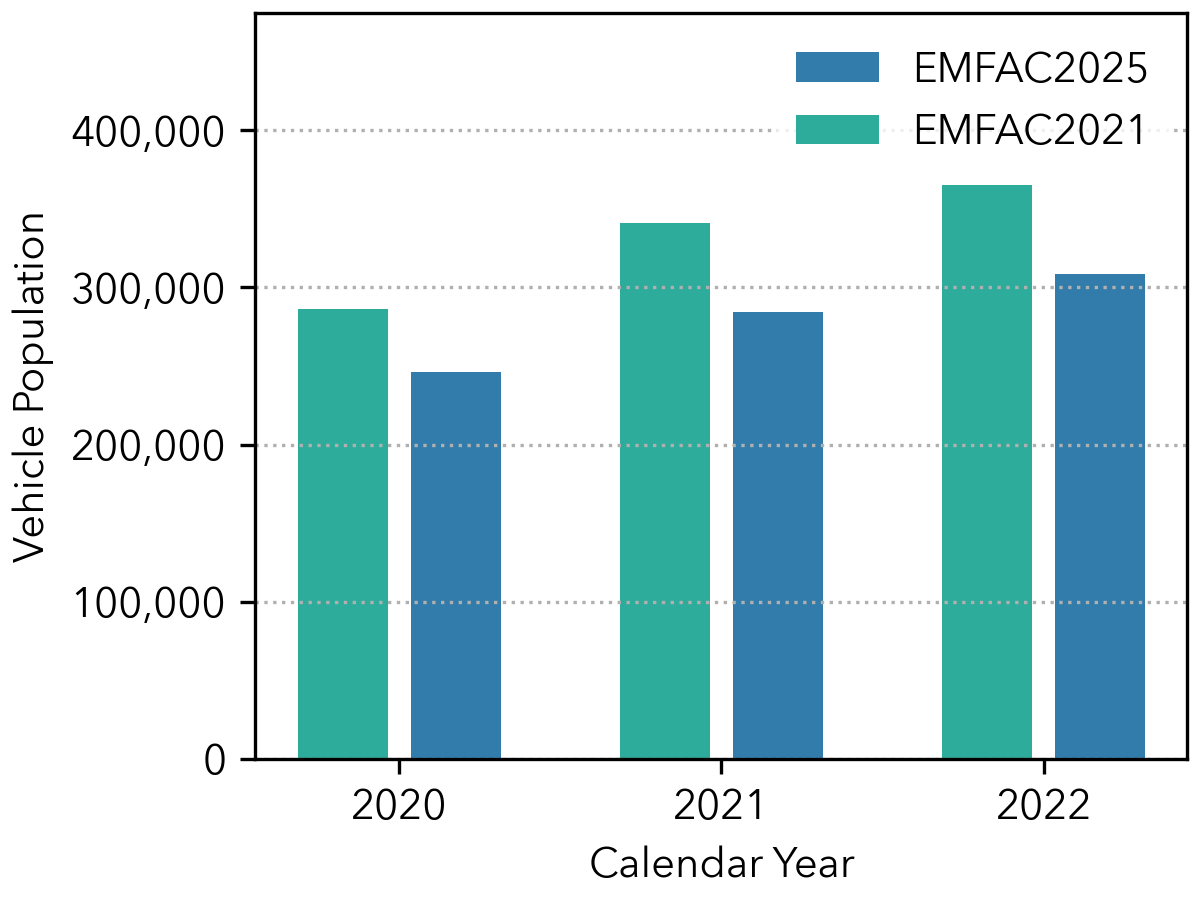
Figure 3.19: Instate Heavy-Duty Vehicle Population of Model Year 2011+: EMFAC2025 (Actual) vs. EMFAC2021 (Forecasted)#
For the new base year of 2022, EMFAC2025 reflects an average age of 9.8 for instate heavy-duty (MHD and HHD) vehicles. EMFAC2021 used calendar year 2019 as the base year which had an average age of 8.5. Figure 3.20 compares age distributions from the 2022 calendar year base year in EMFAC2025 with EMFAC2021 forecasted values. As the chart indicates, the EMFAC2025 base year shows increases in the pre-2008 model years and decreases in the 2017–2022 model years (from both new and used vehicle purchases) as compared to the EMFAC2021 forecast. This trend corroborates the previous figure and may also be due to 2010 engine standard truck owners waiting until calendar year 2023, the final year of the Truck and Bus Regulation, to purchase a truck with a 2010 engine or later. Additionally, a greater fraction of trucks with 2010 or older engines may have been able to qualify for exemptions under the Truck and Bus Regulation than expected (e.g. the low-mileage exemption). Because out-of-compliance trucks will have their registration withheld by the DMV, and CARB’s historical counts are based on the DMV registration data, we can be certain the increased counts of older trucks in EMFAC2025 are Truck and Bus compliant, at least as of 2022. However, since many old trucks may get replaced in the final year of Truck and Bus, 2023, and it may take a year for DMV to update records and start implementing registration holds, the age distributions of the older trucks may shift significantly by calendar year 2024.
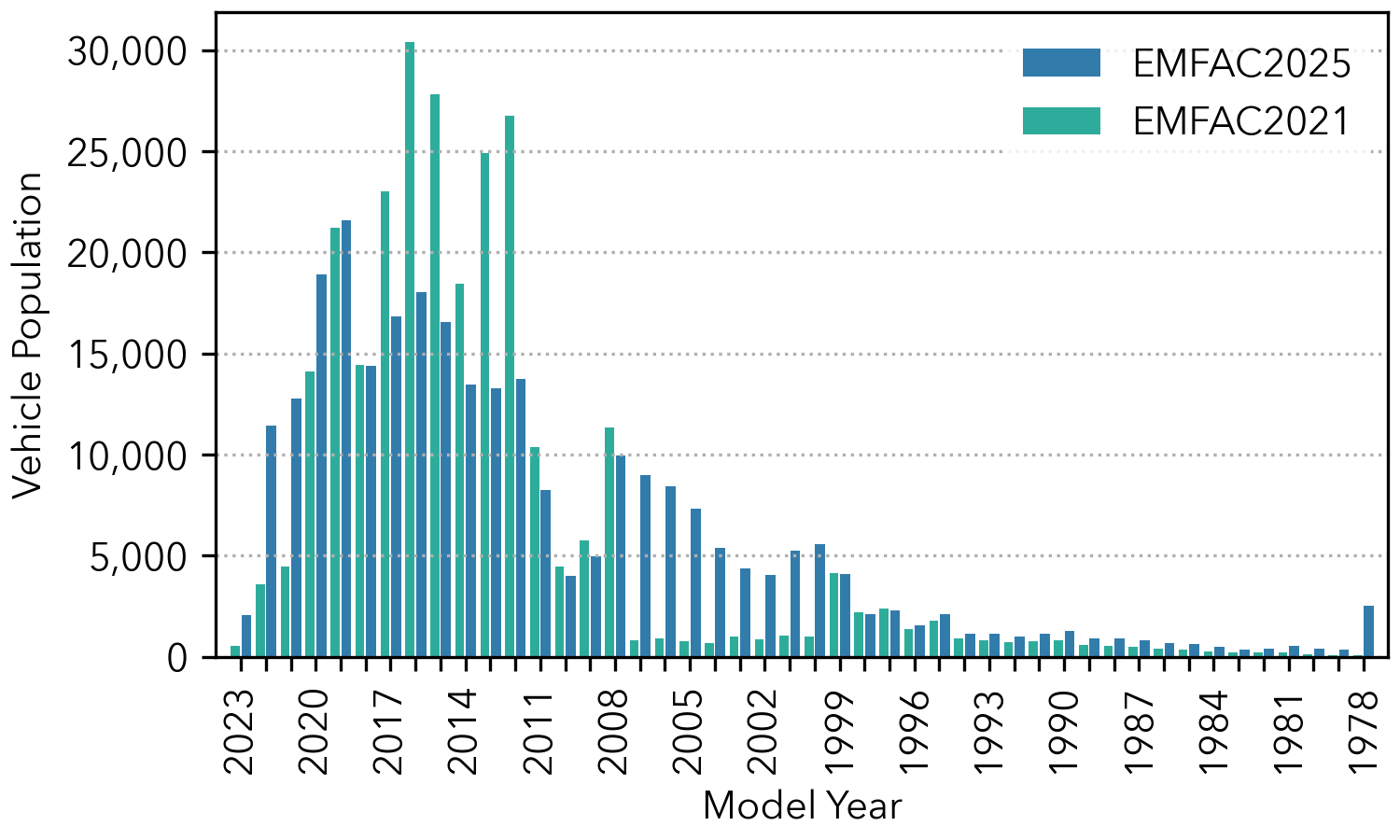
Figure 3.20: Instate Heavy-Duty Model Year Distribution in 2022: EMFAC2025 (Actual) vs. EMFAC2021 (Forecasted)#
Port trucks had to meet the drayage rule that required model year 2007 or newer engines by the beginning of calendar year 2014, which lowered the average age of this fleet group. The port truck population in calendar year 2016 had an average age of 5.24. After past drayage rule requirements, no further vehicle replacements had been required through calendar year 2022 so the average age increased to 8.1 in calendar year 2022 in EMFAC2025. This is slightly younger than the projected average age of 9.0 for calendar year 2022 in EMFAC2021. The following Figure 3.21 provides a comparison of the age distributions for the 2022 calendar year in EMFAC2025 with EMFAC2021 forecasted values. It should be noted that Port trucks need to meet the 2010 engine standard requirement by January 1, 2023, as required by the Truck and Bus rule.
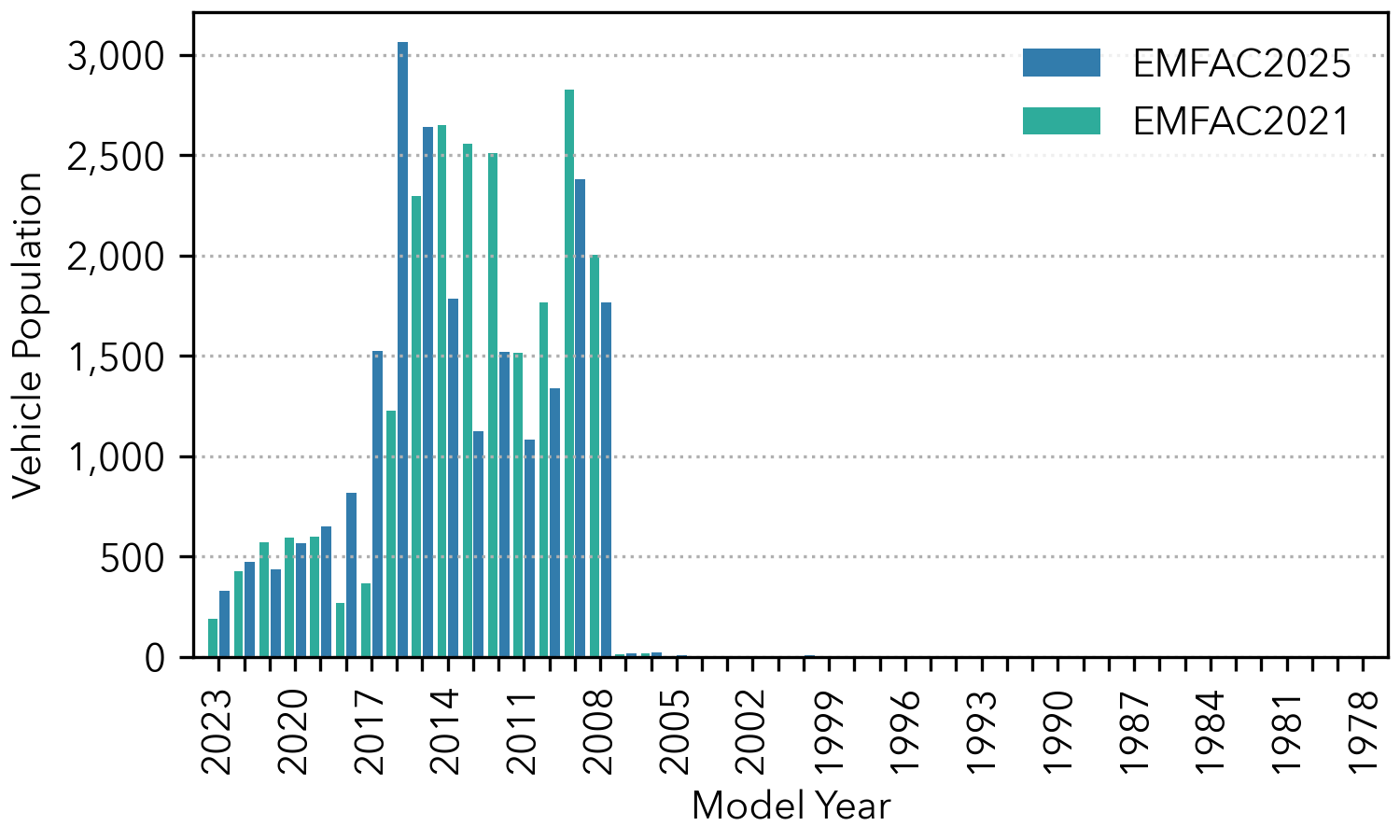
Figure 3.21: Heavy Heavy-Duty Port Truck Model Year Distribution in 2022: EMFAC2025 (Actual) vs. EMFAC2021 (Forecasted)#
For HHD instate tractors, the EMFAC2021 base year of calendar year 2019 had an average age of 8.0 which has increased to 8.1 in the updated EMFAC2025 base year of calendar year 2022. A comparison of the age distributions for the 2019 calendar year in EMFAC2021 with EMFAC2025 values for heavy heavy-duty instate tractors is shown in Figure 3.22.
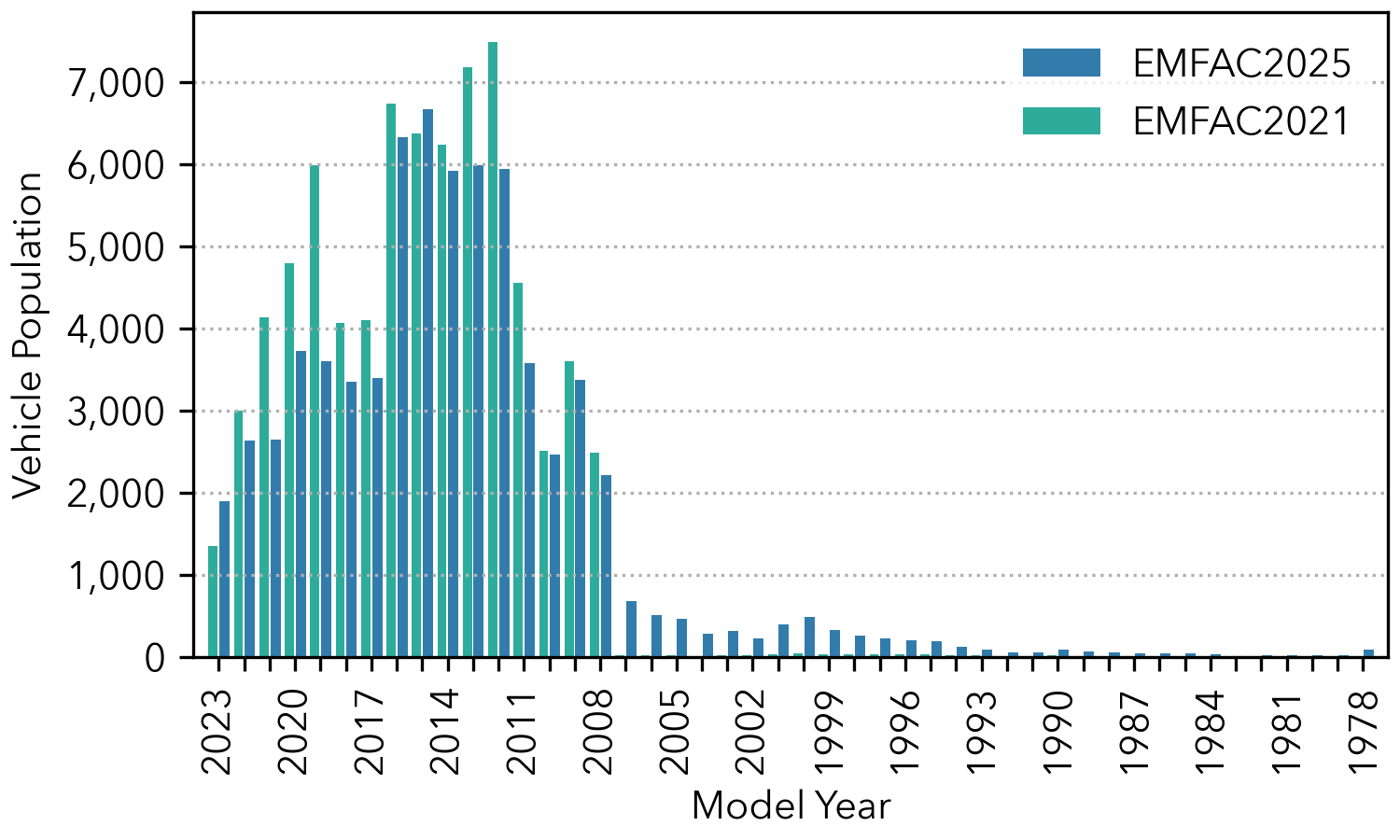
Figure 3.22: Heavy Heavy-Duty Instate Tractor Model Year Distribution in 2022: EMFAC2025 (Actual) vs. EMFAC2021 (Forecasted)#
Figure 3.23 compares the base year populations of medium heavy-duty instate vehicles in EMFAC2025 and EMFAC2021. The EMFAC2021 base year of calendar year 2019 had an average age of 11.1, which has decreased slightly to 10.5 in the updated EMFAC2025 base year of 2022. This is higher than the average age of 8.8 years that EMFAC2021 projected for calendar year 2022.
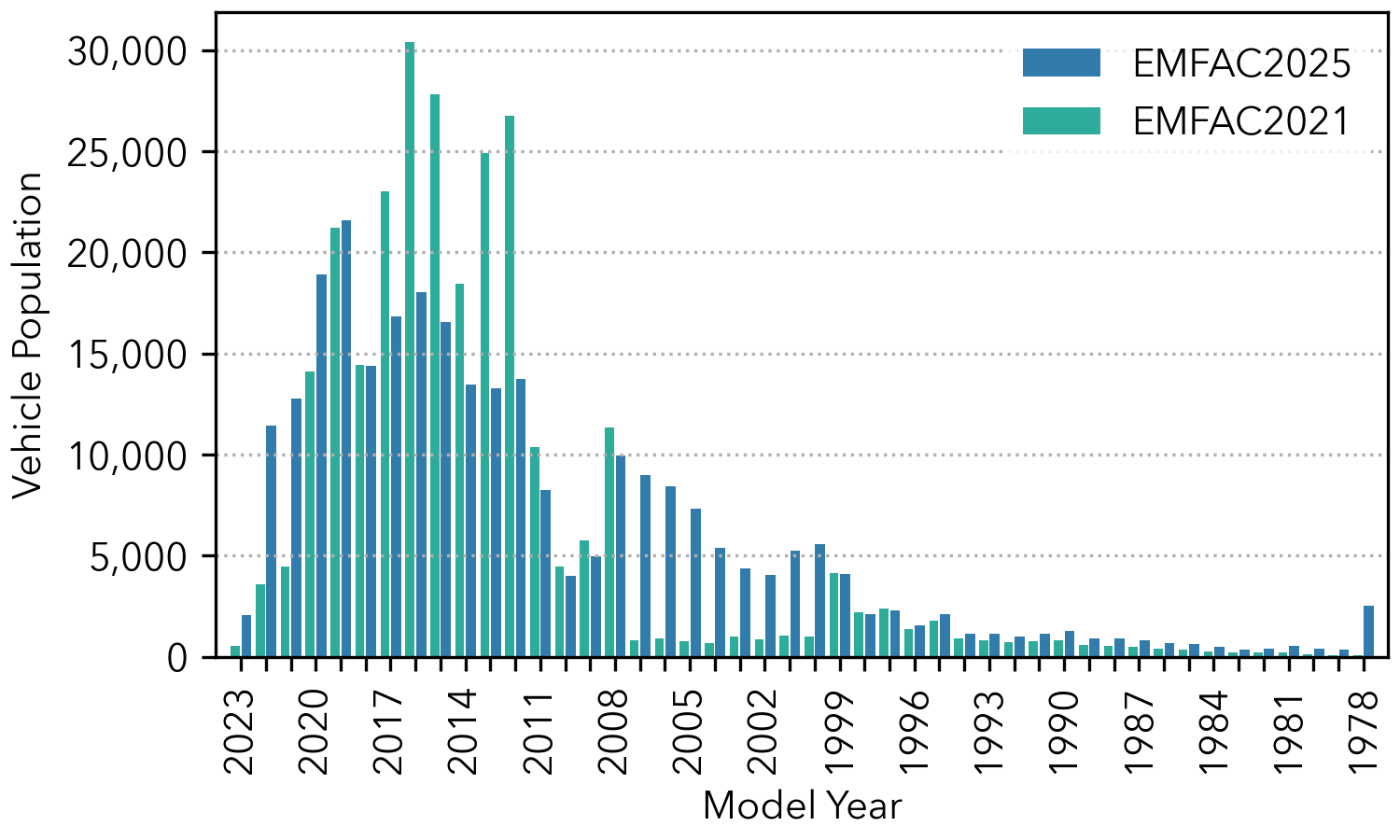
Figure 3.23: Medium Heavy-Duty Instate Model Year Distribution in 2022: EMFAC2025 (Actual) vs. EMFAC2021 (Forecasted)#
3.2.3. California Interstate (CAIRP) Heavy-Duty Fleet Population#
The following figure compares EMFAC2025 and EMFAC2021 vehicle populations for heavy-duty Interstate trucks that report into the International Registration Plan (CAIRP) and designate their base jurisdiction as California. These trucks are authorized to operate within California and within other states or provinces. The assumption made for the trucks in this fleet is that although they are based in California, they will drive a significant fraction of their VMT outside of California. Ultimately each of these trucks will generate less in-state emissions than in-state trucks will. In Figure 3.24 EMFAC2025 shows similar counts in calendar year 2020 but with increasing counts for calendar year 2021 and 2022 relative to the forecasted vehicle population by EMFAC2021.
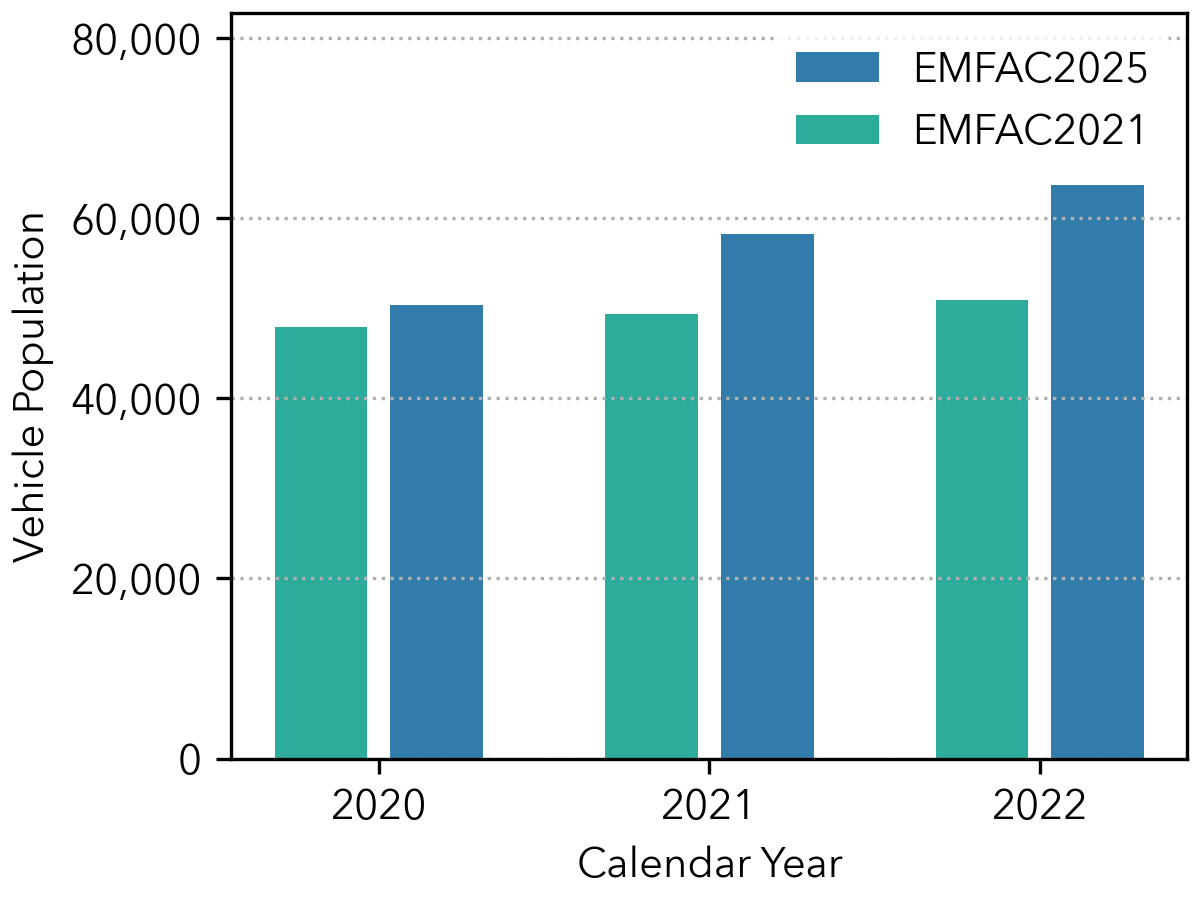
Figure 3.24: CAIRP Heavy-Duty Vehicle Population: EMFAC2025 (Actual) vs. EMFAC2021 (Forecasted)#
For the heavy heavy-duty (Class 8 or GVWR > 33,000 lbs) CAIRP, the calendar year 2019 fleet had an average age of 5.4 in the base year for EMFAC2021. This vehicle group was projected to have an age of 5.1 in calendar year 2022 by EMFAC2021, very close to the age estimate from EMFAC2025 of the same calendar year, vehicle class and weight group, 5.06 years old. A comparison is shown in Figure 3.25.
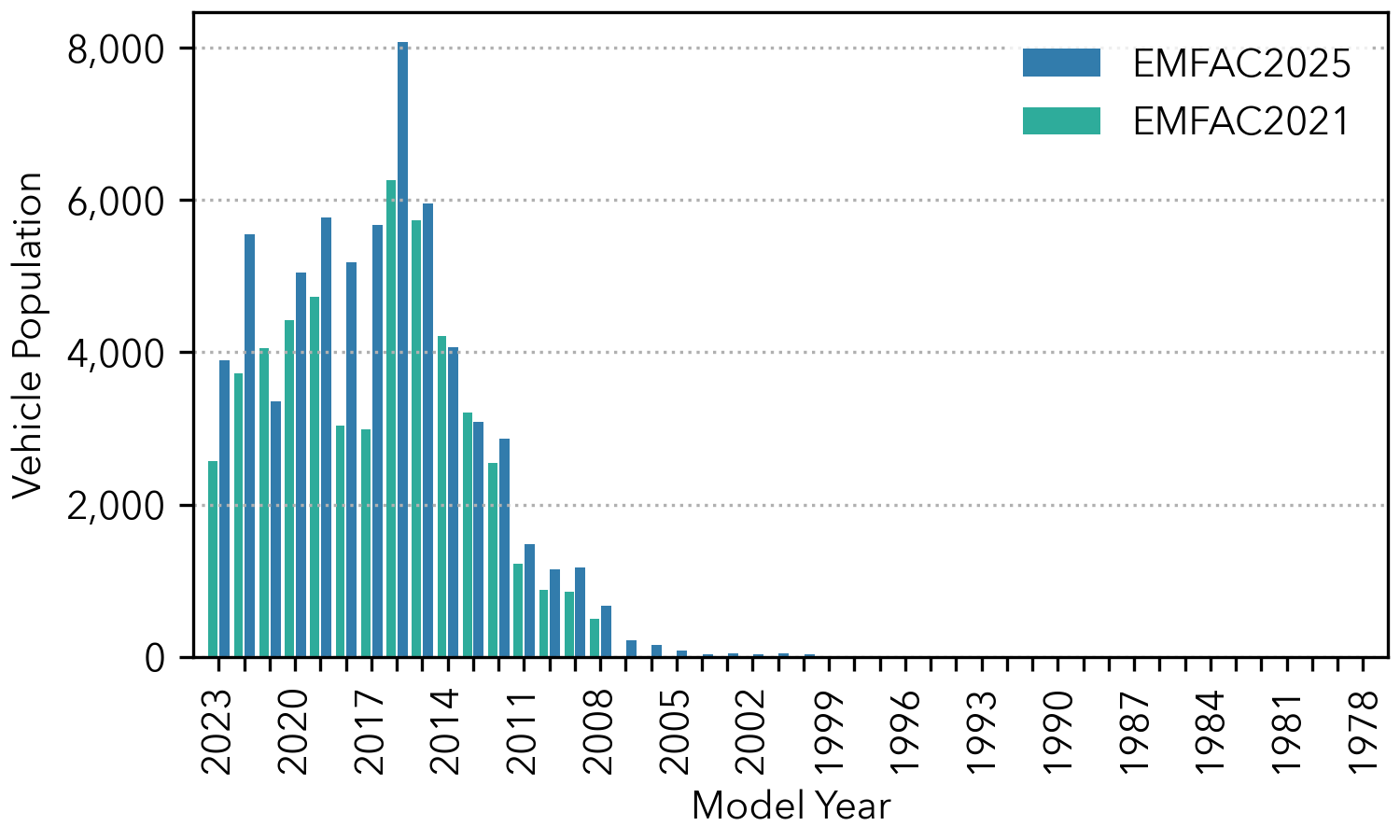
Figure 3.25: Comparison between EMFAC2025 (Actual) and EMFAC2021 (Forecasted) Heavy Heavy-Duty CAIRP Model Year Distribution in Calendar Year 2022#
3.2.4. Bus Fleet Population#
Bus fleet types presented in this section include school buses, motor coaches, and other buses. The urban transit bus inventory has a separate module that began with EMFAC2017 and is discussed separately. Figure 3.26 displays the updated heavy-duty bus population for calendar years 2020–2022. For all three years EMFAC2025 shows slightly lower bus counts than were forecasted by EMFAC2021.
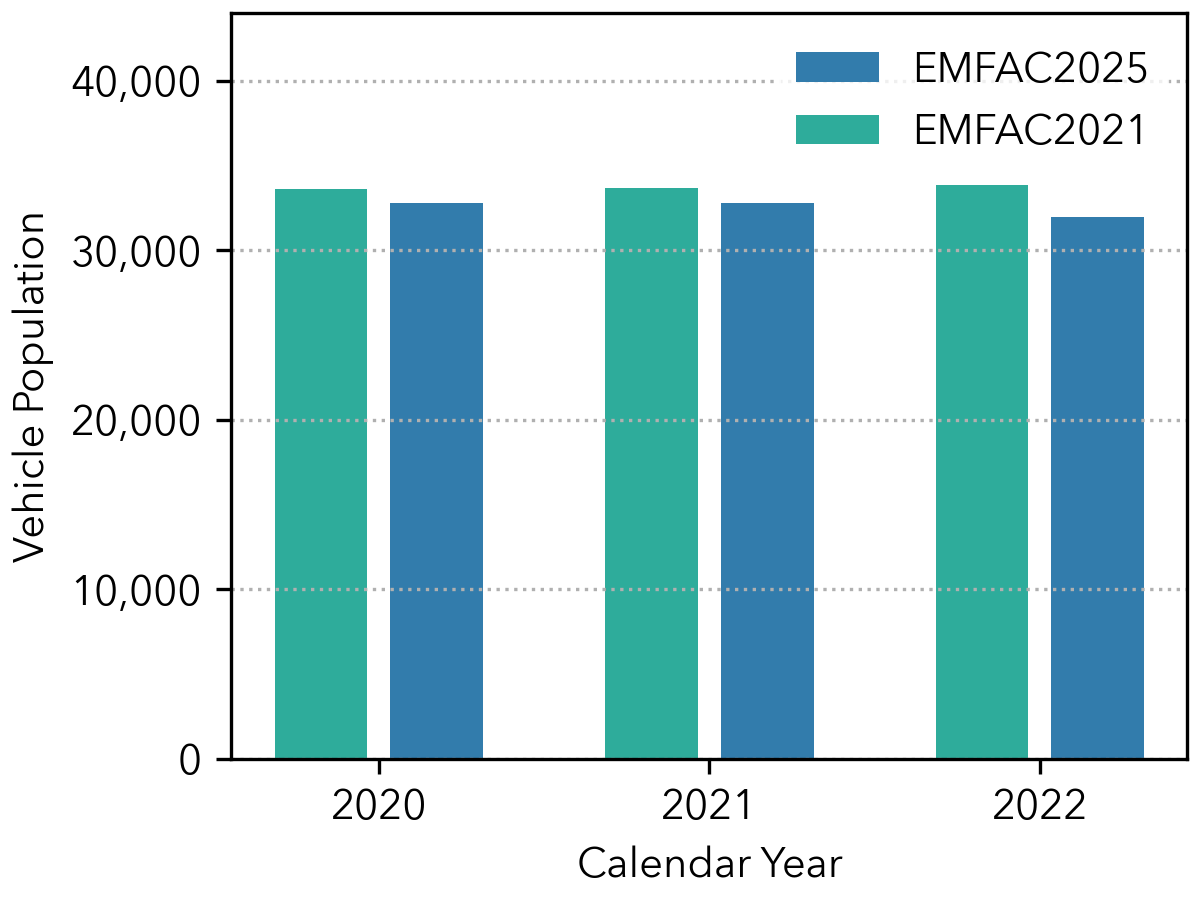
Figure 3.26: Heavy-Duty Bus Vehicle Population: EMFAC2025 (Actual) vs. EMFAC2021 (Forecasted). Urban Transit Buses are excluded.#
EMFAC2025 continues to make use of California Highway Patrol inspection reports to quantify the school bus population. The DMV appears to undercount school buses each year, compared to the CHP. Because the CHP inspects each in-use school bus every two years, their VIN lists are considered to be more accurate. The DMV counts are ultimately scaled up (typically around 20% each year) to align with the CHP list of distinct school bus VINs. Figure 3.27 compares the age distributions for heavy-duty buses. EMFAC2021 has estimated the calendar year 2022 to have an average age of 11.8, while EMFAC2025 showed the year’s age to be slightly older, at 12.5.
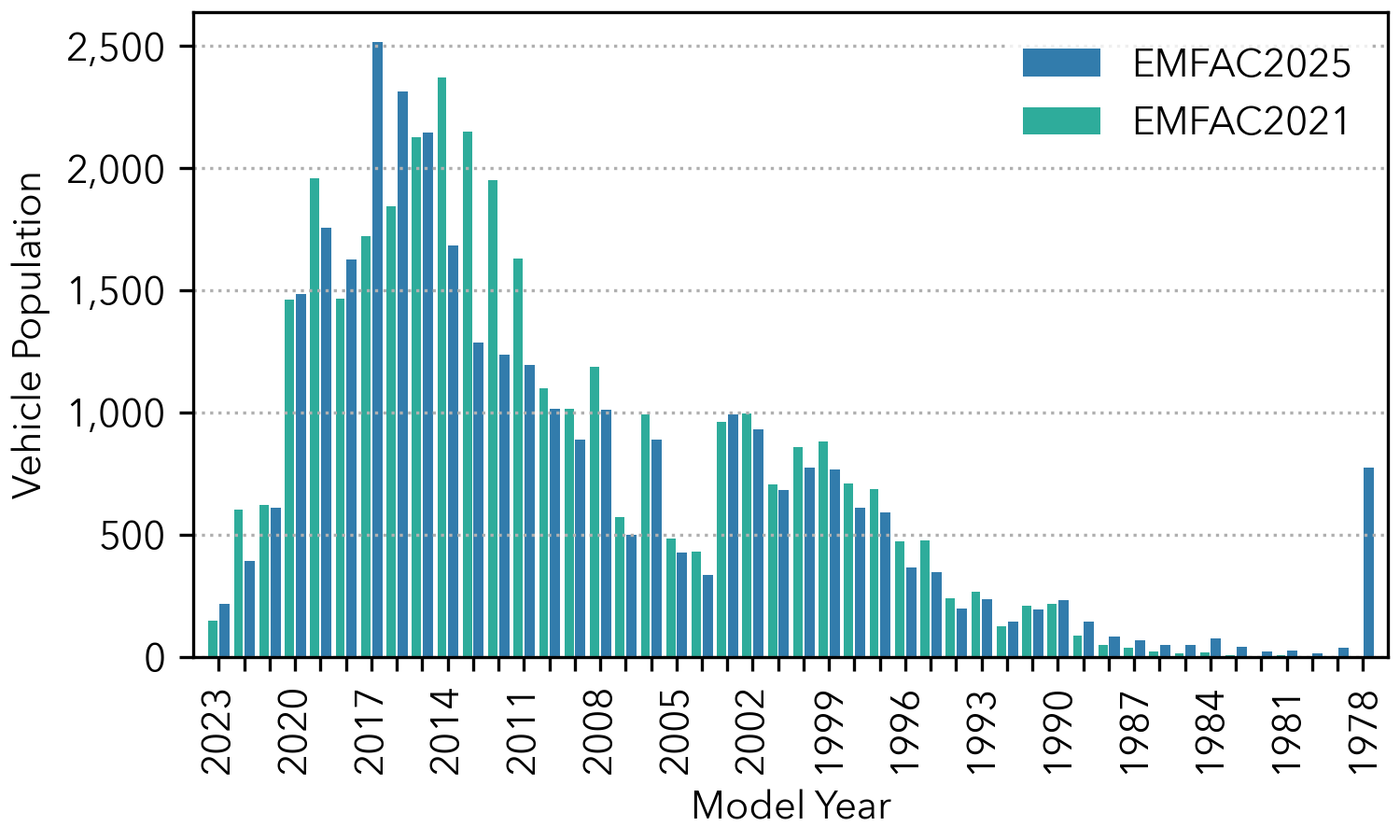
Figure 3.27: Heavy-Duty Bus Model Year Distribution in 2022: EMFAC2025 (Actual) vs. EMFAC2021 (Forecasted)#