
6.2. Carbon Dioxide (CO2) Base Emission Rate Update#
The GHG module, first introduced in EMFAC2017, was enhanced in EMFAC2021 to improve CO2 emission rate estimates for vehicles from model year 2009 onward. The EMFAC2021 update used more accurate U.S. EPA 5-cycle fuel economy data and better reflected real-world driving conditions. The EMFAC2025 update retains the same methodology as EMFAC2021 but is updated using DMV registration and fuel economy data from calendar years 2020 through 2022. The methodology is described in detail in Section 4.3.3 of the EMFAC2021 Technical Documentation (CARB, 2021). In general, the following steps were taken to update the CO2 emission rates:
The DMV registration database was queried to obtain vehicle attributes (make, model, model year, fuel type, engine size, drivetrain type, number of cylinders, and transmission type) for passenger cars (LDA and LDT1) and light-duty trucks (LDT2 and MDV) operating in California.
The most recent fuel economy data for the year 2022 was obtained from the U.S. DOE’s fueleconomy.gov database, containing 5-cycle fuel economy ratings and detailed vehicle specifications.
Each vehicle in the DMV dataset was matched to the closest corresponding vehicle in the EPA database using an advanced string-matching algorithm based on detailed vehicle attributes. This algorithm is further described in Chapter 2.4 of the SB 1014 Clean Miles Standard, 2018 Base Year Emission Inventory Report (CARB, 2019).
Assigned 5-cycle city fuel economy values (mi/gal) were converted to CO2 emission rates (g/mi) using fuel-specific conversion factors: 8,887 g CO2/gal for gasoline and 10,180 g CO2/gal for diesel.
Assuming complete combustion of fuel, the CO2 emissions through model year 2022 were calculated using Equation (6.1):
(6.1)#\[\text{CO}_2\ \text{Emissions (g/mi)} = \frac{\text{Conversion Factor (g/gal)}}{\text{Fuel Economy (mi/gal)}}\]For model years 2023 through 2032, CO2 emission factors were projected using federal GHG standards and manufacturer agreements.
Based on finalized CO2 standards under the Final SAFE Rule, a 1.84% year-over-year (YoY) reduction was applied to gasoline passenger cars, and a 1.75% YoY reduction was applied to light trucks from 2023 to 2026.
For vehicles subject to the Six Manufacturer Framework Agreement, a 2.7% YoY reduction was applied from model years 2023 to 2026 for both gasoline passenger cars and light-duty trucks.
Lastly, based on CARB’s GHG compliance data, market share splits were assumed between framework and non-framework vehicles in California’s fleet:
For light-duty passenger cars: 38% framework and 62% non-framework.
For light-duty trucks: 34% framework and 66% non-framework.
Figures 6.23 and 6.24 compare CO2 emission rates between EMFAC2021 and EMFAC2025 for passenger cars and light-duty trucks for model years 2010 through 2030, respectively. CO2 emissions for model years 2020 through 2022 are derived from DMV and fuel economy data, whereas CO2 emission data for model years 2023 through 2030 are projected using GHG emission standards. As shown, prior to 2020, EMFAC2025 followed the same trajectory as EMFAC2021 for both vehicle categories. Minor differences emerged due to the incorporation of updated DMV and fuel economy data from 2020 to 2022. Differences in emission rates beyond 2022 reflect recalculated projections based on this updated dataset. In EMFAC2025, CO2 emissions for model year 2020 were similar to those in EMFAC2021 for passenger cars but lower for light-duty trucks. However, for model years 2021 and 2022, both passenger cars and light-duty trucks show higher CO2 emissions in EMFAC2025 compared to EMFAC2021. These higher emission levels are carried forward in the estimates for model years 2023 through 2026. From 2026 to 2030, CO2 emissions are projected to remain steady, as regulatory standards are only projected through 2026. For passenger cars, EMFAC2025 shows moderate reduction rates of approximately 5.5 grams per model year in CO2 emissions, similar to the 6.6 grams per model year reduction in EMFAC2021 for passenger cars. For light-duty trucks, however, CO2 emission rates reduce at a rate of roughly 6.9 grams per model year, while EMFAC2021 reduction in CO2 emission rates is approximately 12.1 grams per model year.
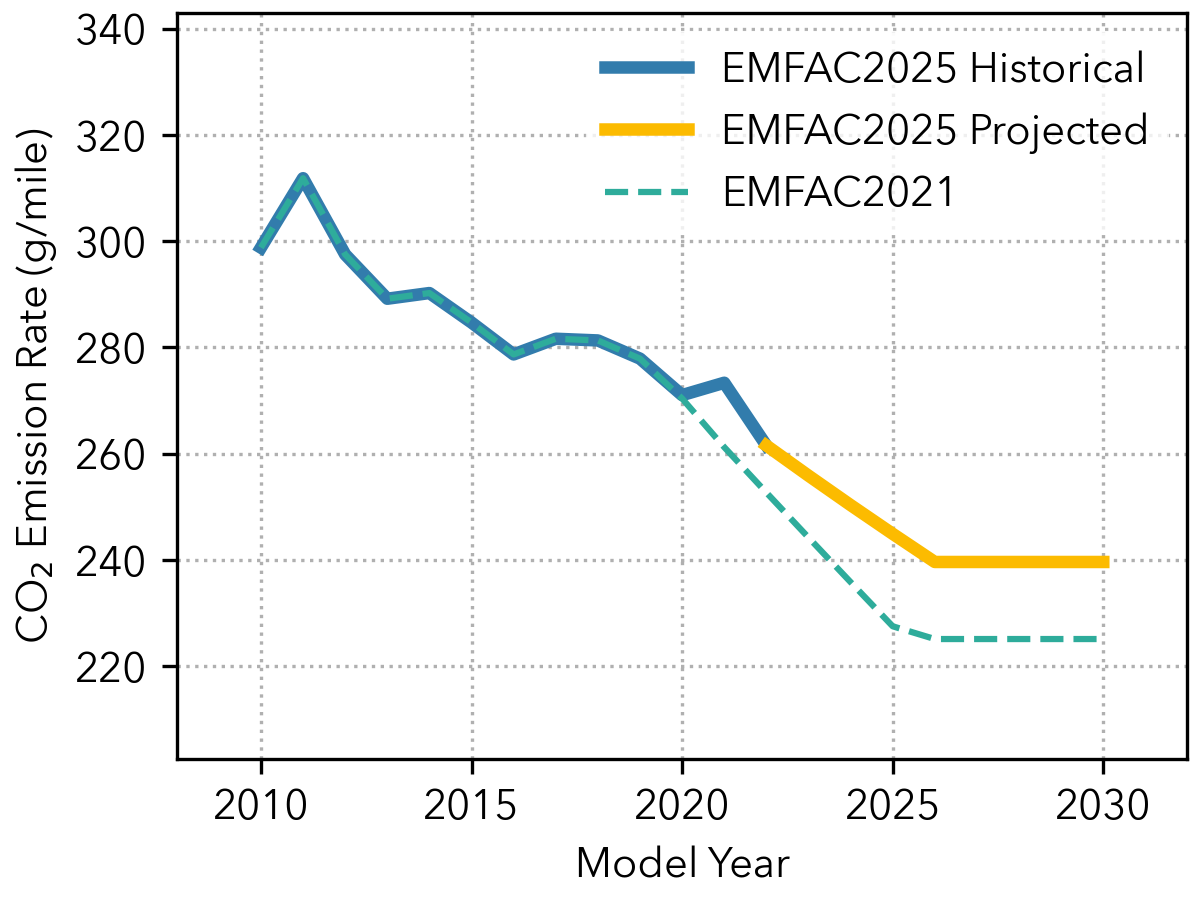
Figure 6.23: CO2 Emission Rates for Passenger Cars (LDA and LDT1)#
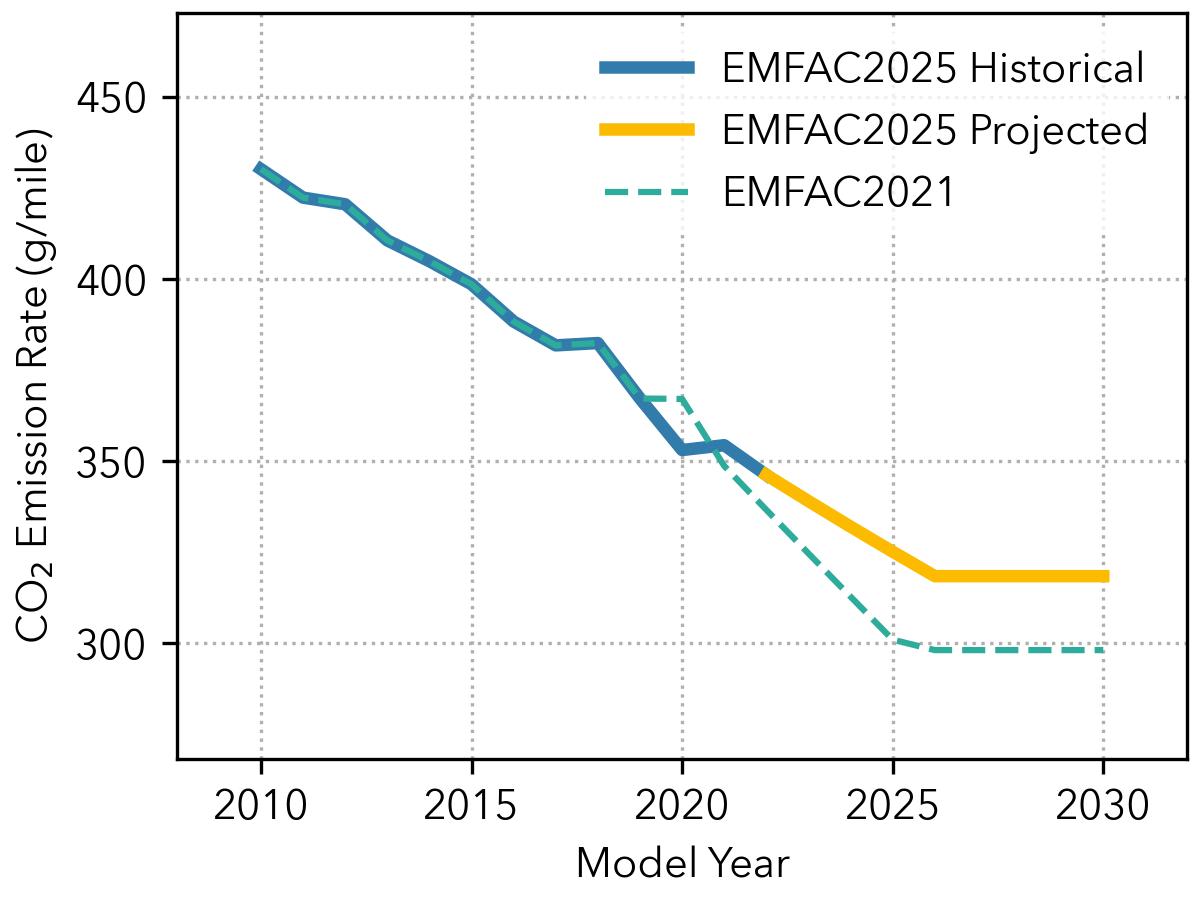
Figure 6.24: CO2 Emission Rates for Light-Duty Trucks (LDT2 and MDV)#